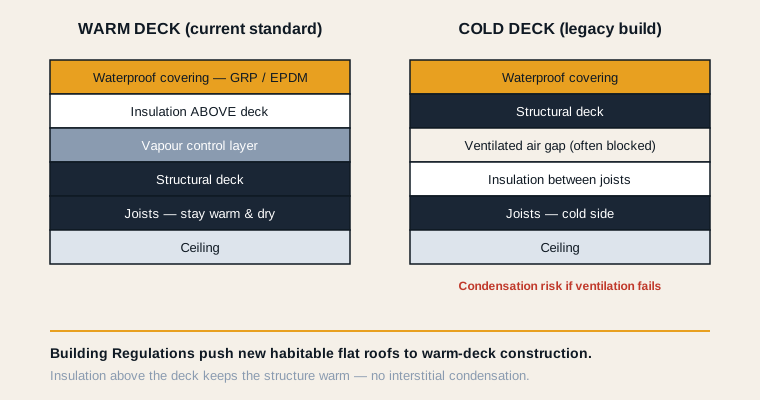
The Decision Comes Down to the Deck
The weatherproofing membrane — felt, GRP, EPDM, or torch-on — is only one part of a flat roof. Under it is the deck: typically either timber boarding or plywood. If the deck has absorbed water over years of membrane failure, it becomes soft, delaminated, and structurally unreliable. A new membrane laid on a rotten deck will fail within two to three years at the seams and edges where the deck moves. This is the central question of any flat roof survey: what’s under the covering, and is it sound?
A competent roofer will lift tiles or probe the deck surface at the edges and at any obvious failure points before advising repair or replacement. If they quote without doing this, treat the quote with caution regardless of price.
When Repair Is the Right Call
Repair is viable when: the failure is localised (a single split seam, a failed outlet, a blister at a single point); the rest of the membrane is intact and adhered; the deck beneath the failure is dry and solid; and the membrane system is less than 20 years old. These conditions are common on the post-war rear extensions in Southcourt and Quarrendon that have had one previous layer applied over original built-up felt, where a targeted repair on the second layer can hold reliably for 8–12 years.
The key check is whether the repair material is compatible with the existing system. Applying torch-on over cold-applied felt, or silicone sealant over EPDM, creates incompatible layers that trap moisture and accelerate failure. Like-for-like repair with the same system is always preferable where it’s possible.
When Replacement Is the Only Answer
Replace when: the membrane has had more than one previous repair layer; failure is across more than 30% of the surface; the deck is soft or delaminated at multiple points; the falls are inadequate and water is ponding centrally (a design fault that repair can’t fix); or the roof is a first-generation built-up felt system over 25 years old on a busy area of the property like a kitchen or bathroom. Patching these roofs extends the problem rather than solving it.
The two modern replacement systems — GRP fibreglass and EPDM rubber — both outperform built-up felt significantly. GRP is rigid, seamless, and carries a 25-year manufacturer warranty. EPDM is flexible, handles thermal movement better, and is marginally cheaper. See our separate guide on GRP vs EPDM for the full comparison.
The Cost Comparison
A targeted flat roof repair on a single-storey Aylesbury extension: £150–£500. A full GRP replacement on the same roof (approx 15m²): £1,800–£2,800. The repair looks much cheaper in year one. But if the repair fails in three years and replacement was the right answer, the total cost becomes £2,000–£3,300 — more than replacement would have cost from the outset, and with three years of stress and leak damage in between. We survey the deck honestly and tell you which camp your roof falls into.
We cover all of Aylesbury and surrounding Buckinghamshire. Free surveys, no call-out fee, 10-year guarantee on all work.
Flat Roof Repair Aylesbury → or call 0129 670 6028